You made a recording. It was useful, it was accurate, and the person you sent it to asked a question twenty minutes later that it answered at the four-minute mark.
They did not get to four minutes.
Where people actually leave
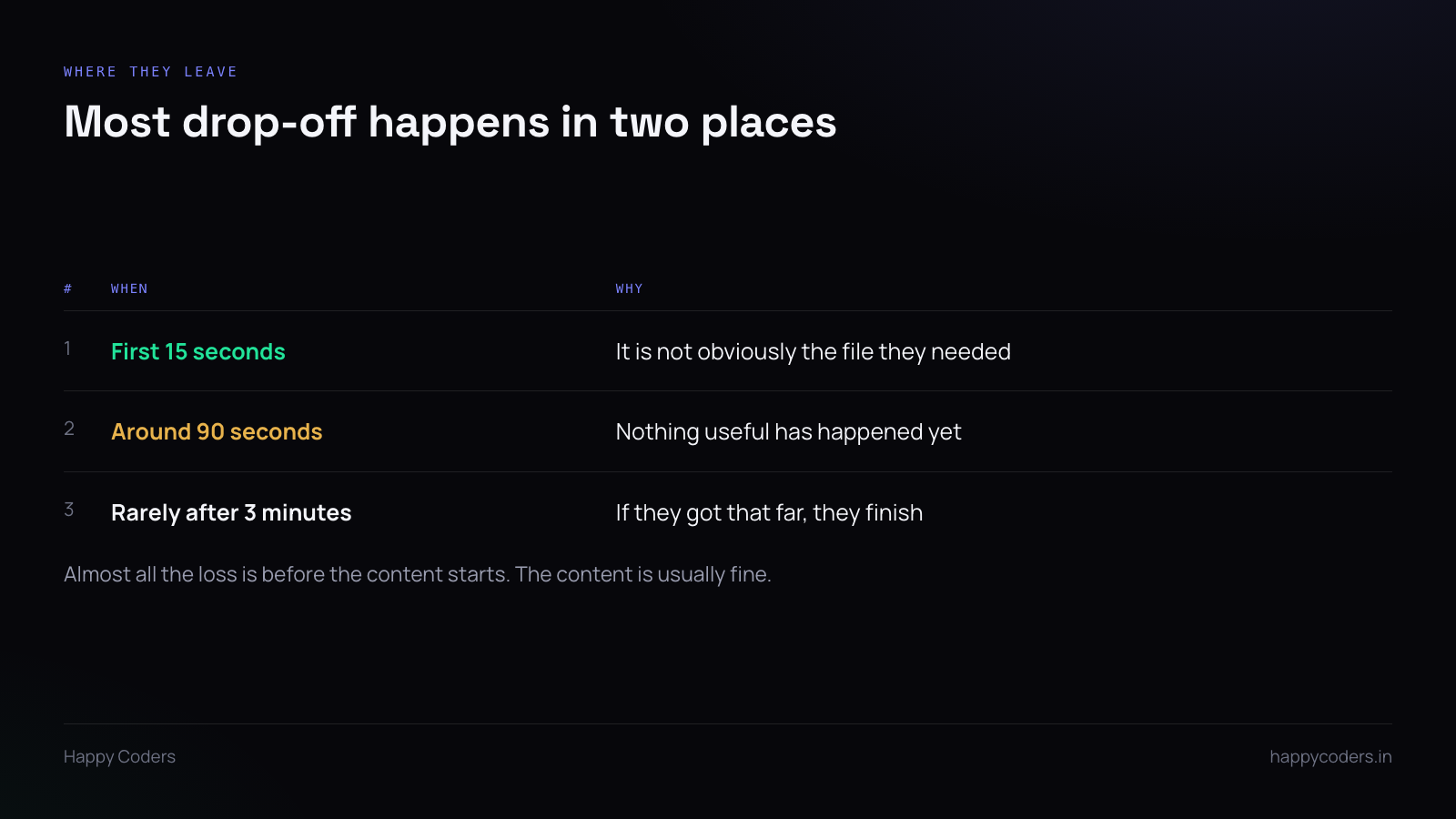
Two places, and neither is where you would guess.
The first fifteen seconds, because they are deciding whether this is the file they needed. And around ninety seconds, because nothing useful has happened yet and they have concluded it is not coming.
After about three minutes, people who are still watching almost always finish. So nearly all the loss happens before your content starts, which means the content is rarely the problem.
Six reasons, most common first
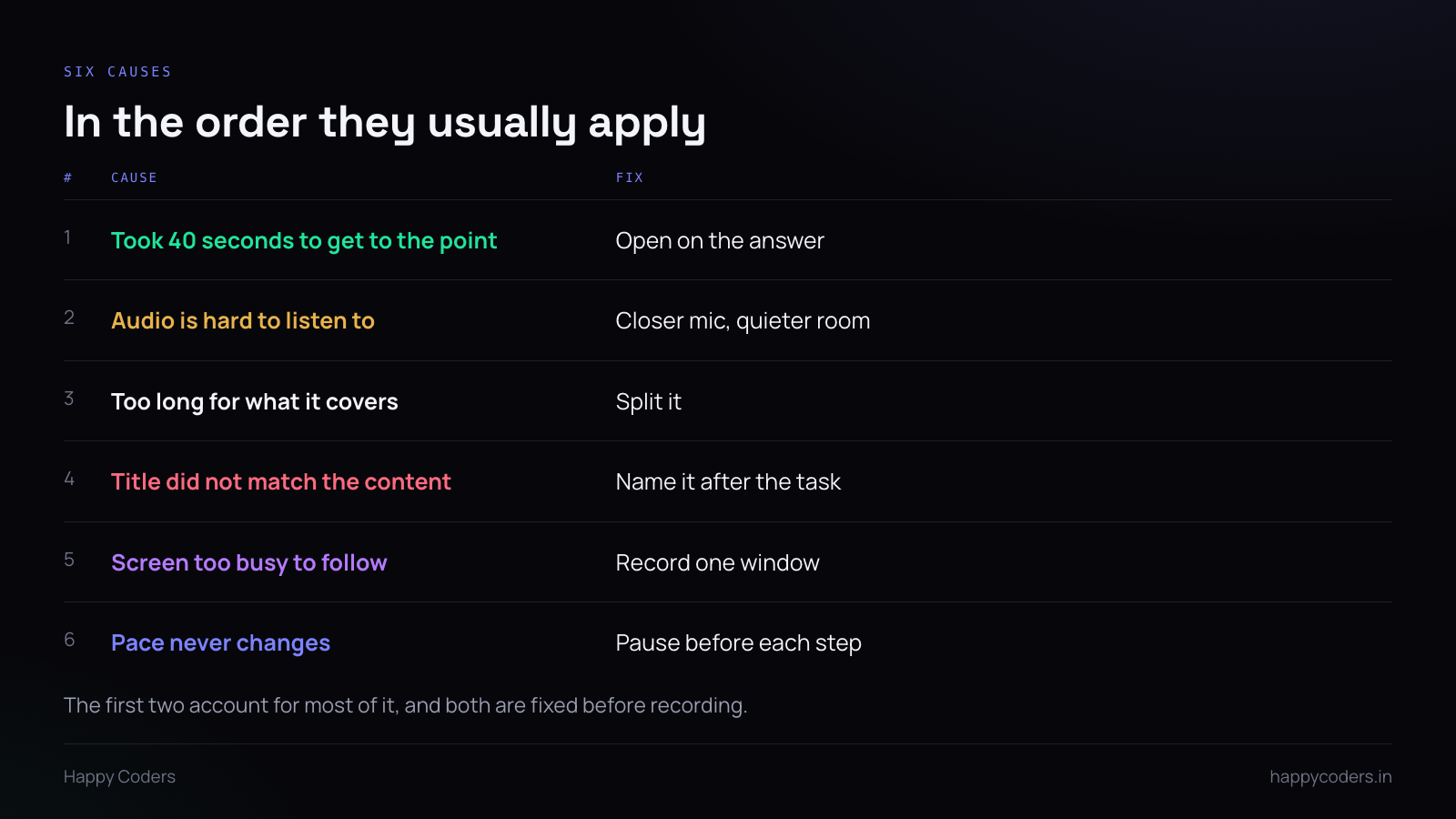
1. It took forty seconds to get to the point
“Hi, hope you are well. So you asked me about the export thing, and I thought rather than typing it all out I would just do a quick video, so let me share my screen here, one second…”
Forty seconds, no information. Meanwhile they are wondering whether this is even about their question.
Open on the answer. “This is where the monthly export lives.” Then show it. Everything else can come after, or not at all.
2. The audio is hard to listen to
Not inaudible — just effortful. A microphone slightly too far away, a room with an edge to it, a voice a bit too quiet so they have to lean in.
People tolerate bad video and abandon bad audio, and they will not tell you that is why. They will say they did not have time.
A closer microphone fixes most of it. Playing back the first ten seconds before committing to a long take catches the rest.
3. It is longer than the thing deserves
Eleven minutes to explain something that takes two is not thorough, it is a tax. And the viewer cannot tell from the outside which eleven-minute recordings contain eleven minutes of content.
If it is long because it covers several things, that is several files.
4. The title did not match
They opened it expecting one thing and the first thirty seconds were about another, so they assumed they had the wrong file.
Name it after the task, in the words somebody would use when asking. Then the first sentence confirms it immediately.
5. The screen is too busy to follow
Full screen capture on a large display, with a sidebar, a browser with twenty tabs, and the real content occupying a third of the frame.
The viewer is hunting for where to look, and hunting is tiring enough that leaving is easier.
Record one window. The content fills the frame and there is nowhere else for attention to go.
6. The pace never changes
A steady stream of clicking and talking with no pauses reads as one undifferentiated block, and there is no sense of progress.
Pause before each step. Say what you are about to do, then do it. The pause is a structural signal — it tells the viewer a new thing is starting, and that is what makes something feel like it is going somewhere.
What is almost never the reason
Production quality. Nobody abandoned your recording because it lacked an intro or because you said “um”. People watch rough recordings all day when the rough recording is answering their question.
Not having your face on screen. For a how-to, the screen is the content.
The content being wrong. They never got to the content.
The test
Watch your own recording from the beginning, once, at normal speed, and notice the first moment you feel impatient.
Whatever is happening at that moment is why people leave. It is almost always in the first ninety seconds, and it is almost always something you could have removed before recording rather than after.