Somebody resigns. There is a notice period, usually a month, and about half of it gets spent on a handover document that nobody reads until the week something breaks — at which point the document turns out to say “deploy using the deploy script” and nothing about the step where you have to wait.
Recording the handover instead takes less of their time, produces something people actually use, and captures the part that written notes always lose.
What writing loses
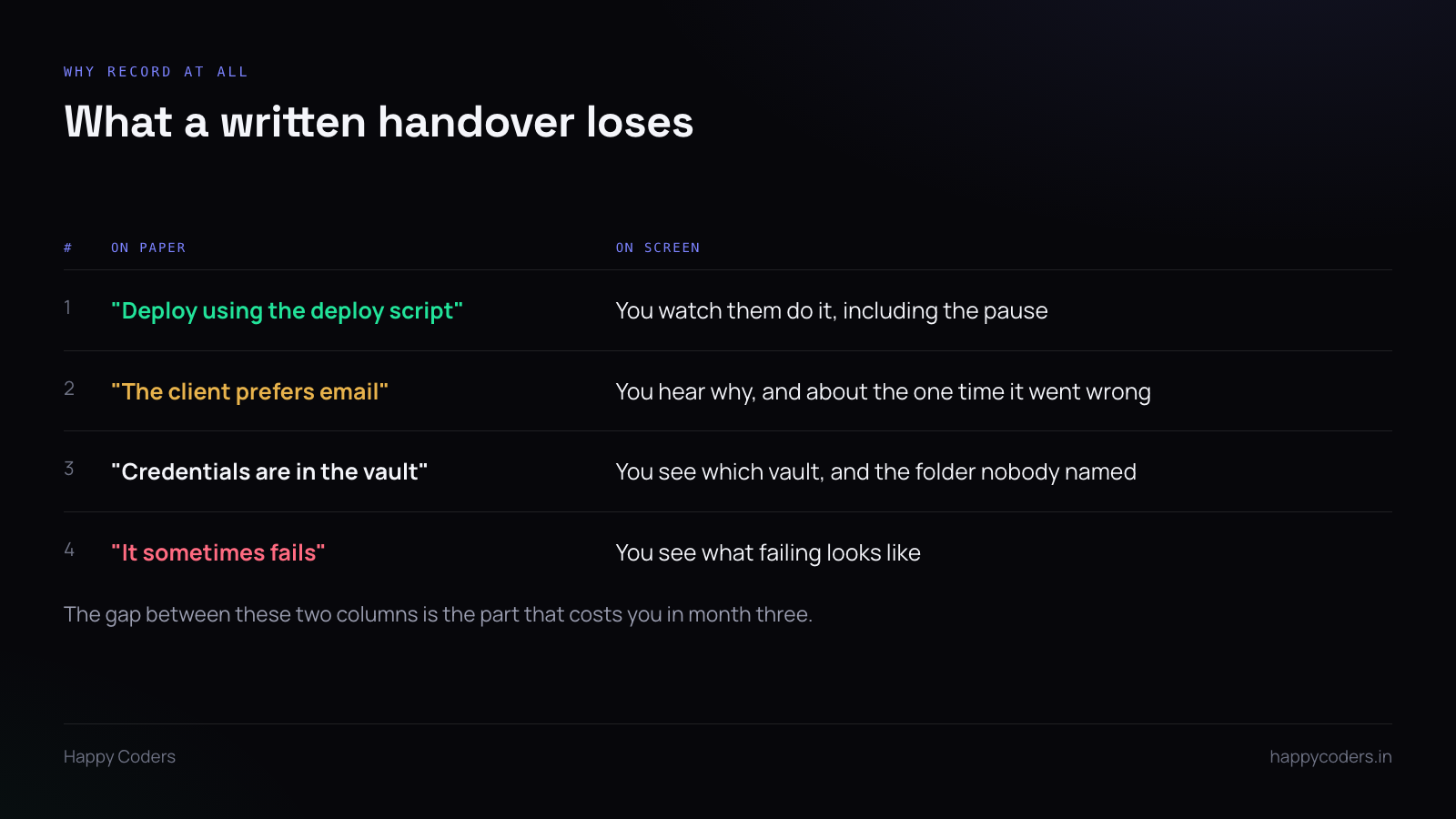
A written handover is a summary written by somebody who already knows the answer. That is the problem with it. The expert does not write down the parts that are obvious to them, and the parts that are obvious to them are exactly the parts the next person gets stuck on.
Watching them do it captures what they would never think to mention: the folder that is not where you would look, the button that takes four seconds and looks like it has frozen, the client whose name in the system does not match the name on the invoices. None of that reaches a document. All of it reaches a recording, because they have to do the thing rather than describe it.
Five sessions, ninety minutes
Do not try to record everything in one sitting. Ninety minutes of continuous talking produces ninety minutes nobody will watch. Five short recordings, each about one thing, get used.
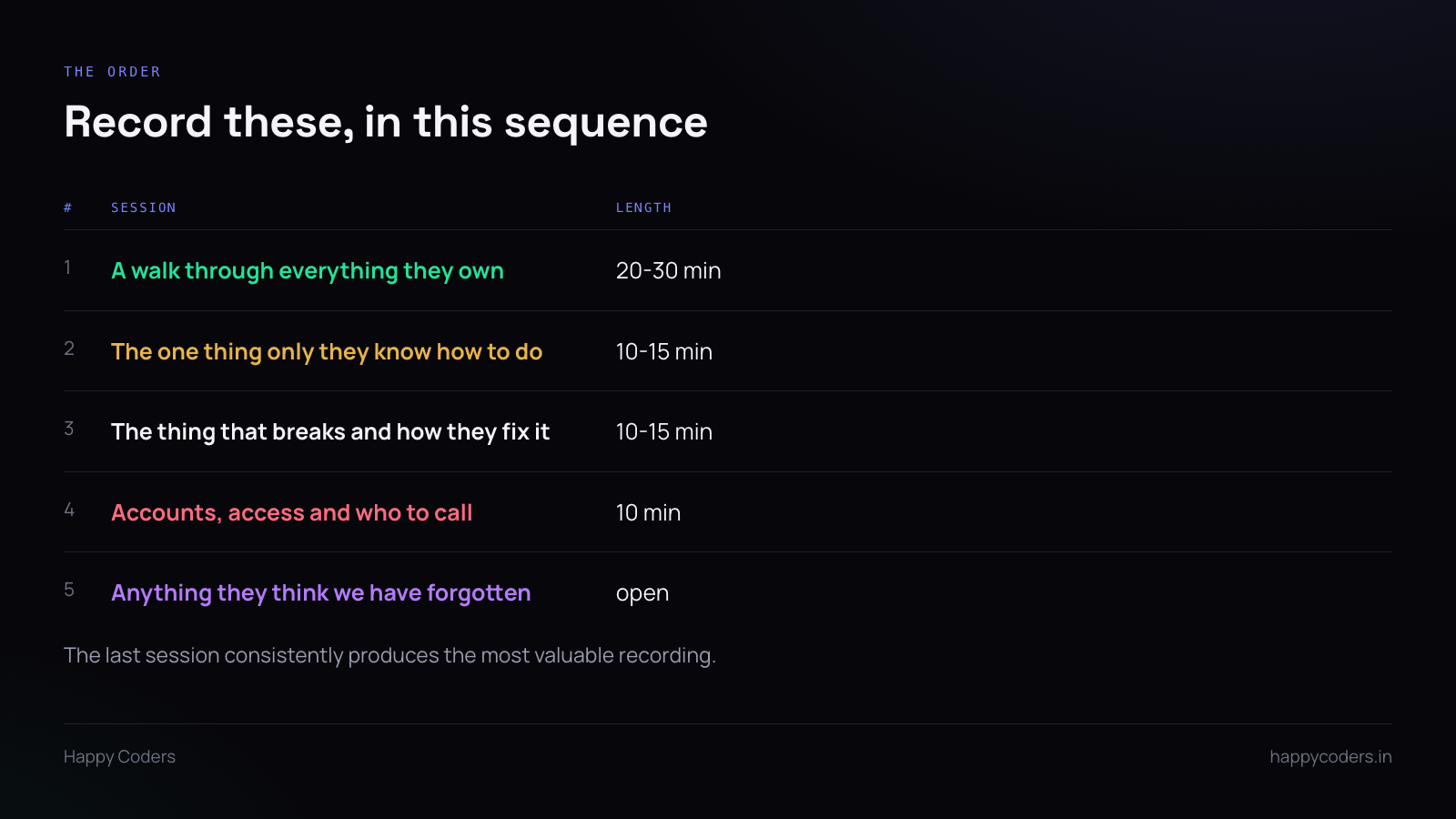
1. A walk through everything they own
Screen share, no preparation, and have them open each thing they are responsible for in turn and say what it is. Twenty to thirty minutes. This is the index — it is how the next person finds out what exists at all, which is the thing nobody realises they are missing until they need it.
2. The one thing only they know how to do
Every person has one. The monthly report that involves three systems and a spreadsheet. The deploy that has a manual step. The client who has to be invoiced differently.
Have them do it, live, while narrating. Not a description — the actual task, start to finish. If it only runs monthly and this is the wrong week, have them walk through it anyway and say out loud where they are improvising.
3. The thing that breaks, and how they fix it
Ask what goes wrong most often. There is always an answer and it is always immediate, because they have fixed it eleven times.
This recording saves more time than the other four combined. The next person will hit that failure in their first month, and the difference between a ten-minute fix and a two-day investigation is whether somebody recorded what it looks like when it happens.
4. Accounts, access and who to call
Which accounts are in their name, which vendor has their phone number, which client calls them directly, which recurring payment is on their card.
Be careful with this one: do not record passwords on screen, and do not record a password manager with the entries expanded. Record the map — which systems exist and where the credentials live — not the credentials themselves. Anyone who later gets this file should learn what to go and ask for, not get handed the keys.
5. Anything they think we have forgotten
Leave this open and let them talk. It is consistently the most valuable recording of the five, because the leaver knows things about the business that nobody has ever asked them.
Record it in the last week, when they are relaxed and slightly nostalgic rather than defensive. The tone of this one is different from the other four and that is the point.
Practical notes
Record the screen, not the person. The face adds nothing here and makes people self-conscious. If a camera bubble helps them talk naturally, use a small one in the corner, or an avatar if they would rather not be on camera at all. What matters is the screen and the voice.
Keep each file findable. Name them so they sort — a date prefix and a short description. 2026-10-09-monthly-client-report.mp4 will still make sense in a year. handover3-final.mp4 will not.
Do not edit them. The pauses and the mistakes are content. When they say “hang on, that is not right, it is the other one” — that is the most useful eight seconds in the file.
Store them where the team can find them, not in the leaver’s own drive. This sounds obvious and it is the most common way handover recordings get lost: they are made, they are good, and they are sitting in an account that gets deactivated on the last Friday.
Ask before you record
Tell them what the recordings are for and who will watch them. Almost everyone agrees — most people want their work to survive them — but being asked matters, particularly in a notice period when someone already feels on the way out.
If they would rather not be on camera, do not push. The screen and the voice is the whole value.
Do it even when nobody is leaving
The reason this works is not resignation. It is that one person knows something and nobody else does, and that is true right now in your team for several things.
The resignation just gives you a deadline. One recording a month, of whatever is currently stuck in one person’s head, is the same exercise without the panic.