Fixed price job, estimated at eighty hours. You are at a hundred and ten, there is real work left, and nobody has told the client.
This is extremely common and it almost never happens through dishonesty. It happens because each individual week looked recoverable.
Why it gets left
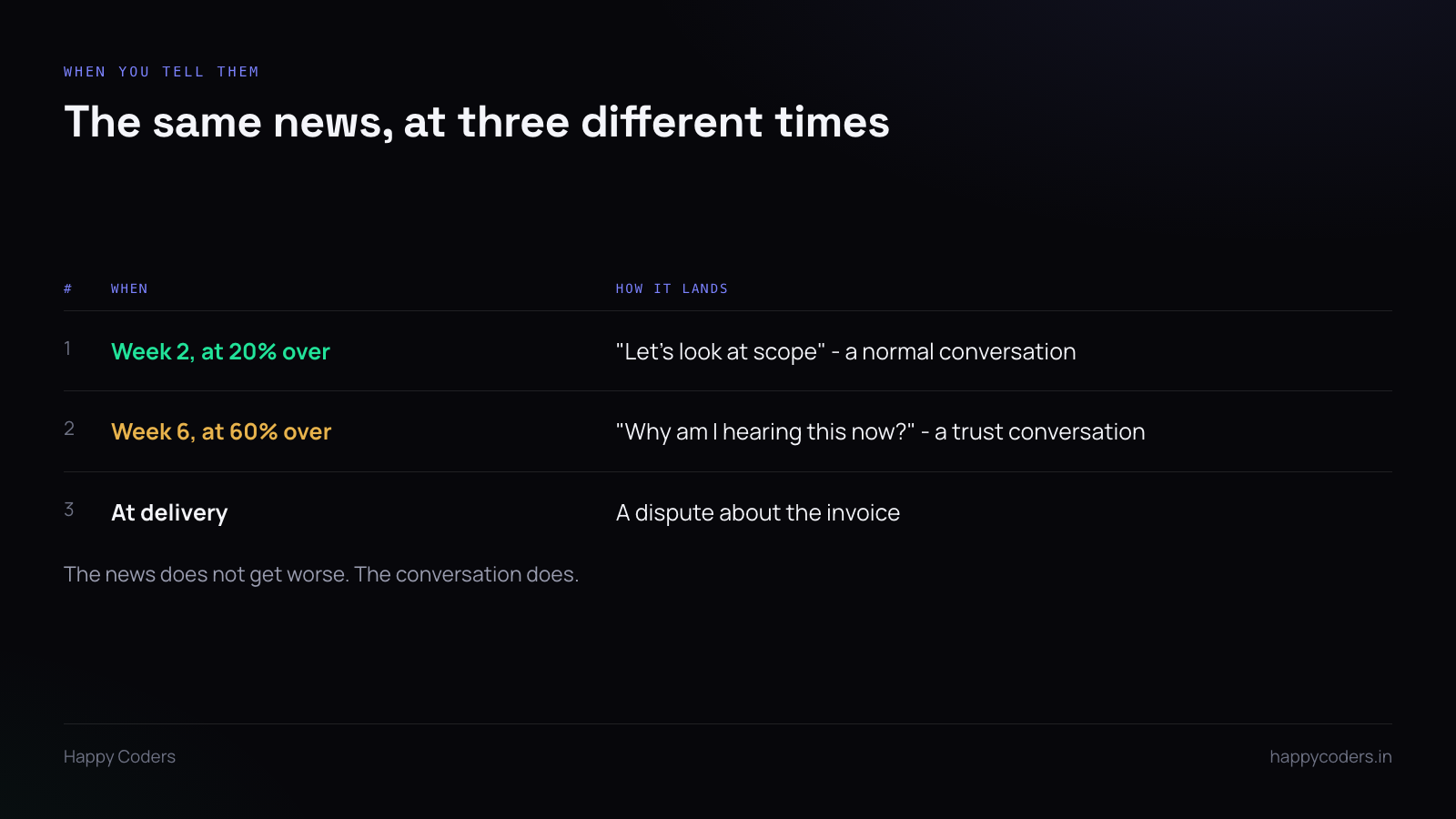
In week two you were twenty per cent over and genuinely thought you would make it back. In week four you were forty per cent over and the conversation had become harder than it was in week two, so it was easier to push. By week six the conversation is no longer about scope, it is about why you did not mention it in week two.
The news did not get worse. The conversation did.
Have it now, today
Every day it waits makes it harder, and there is no version of this where not telling them works out. The alternatives are: tell them now, tell them at delivery when they query the invoice, or absorb it silently and make a loss you never understand.
The third one is the most common and the worst, because it teaches you nothing. The job goes down as “that one was hard” and you quote the next one the same way.
Bring three things
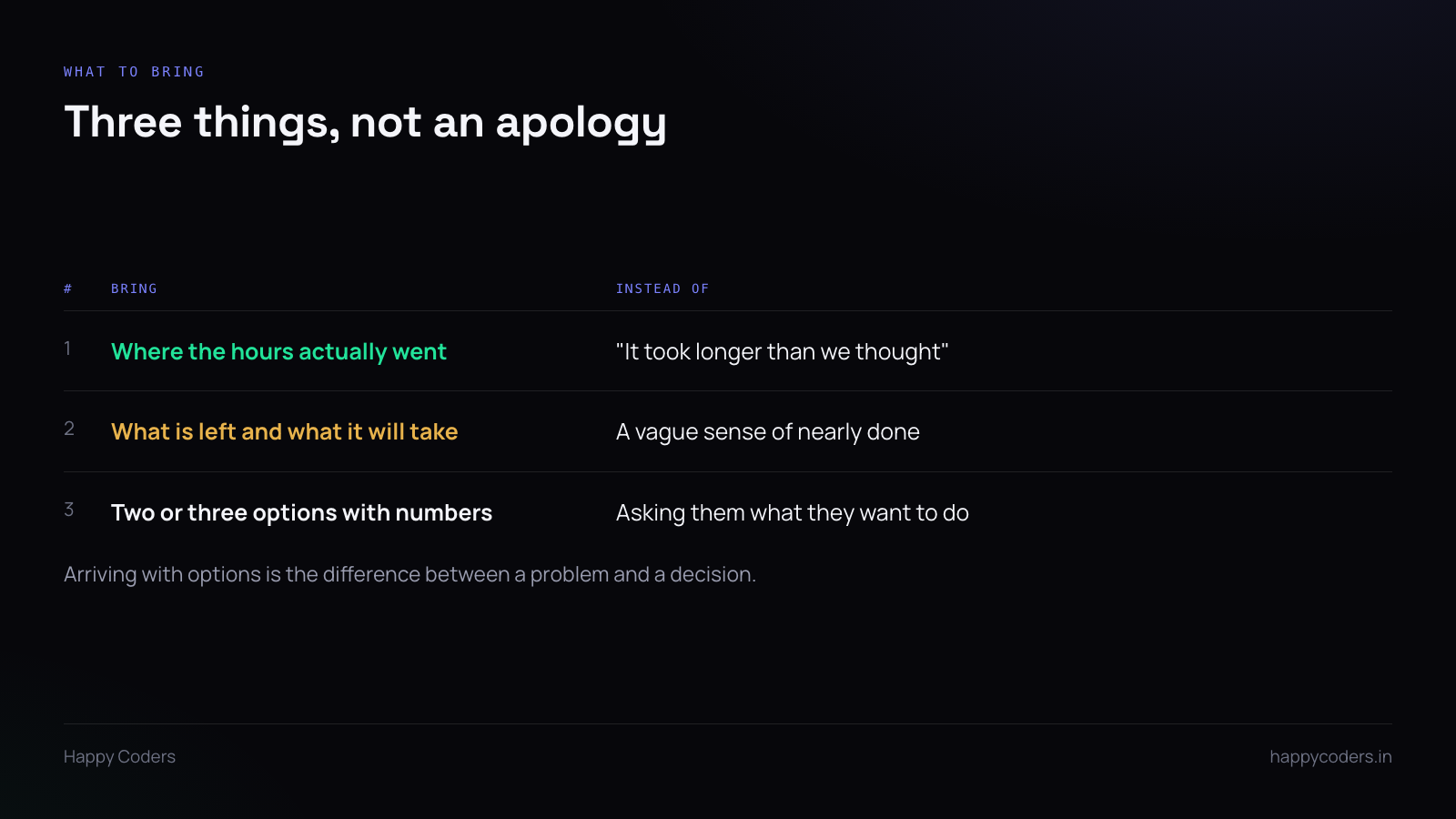
Where the hours actually went. Not “it took longer”. A breakdown: the build was close to estimate, the third round of revisions was twenty hours nobody planned for, the data migration was two days because their export was not what we were told.
This is the part that needs the tracker. Hours against tasks, for a project, is a five-minute report if the work was tracked and an afternoon of reconstruction if it was not — and a reconstruction looks like what it is.
What is left, and what it will take. Be specific and be realistic. The temptation to understate the remainder so the total sounds better is very strong and it guarantees a second version of this conversation in three weeks.
Two or three options, with numbers. This is what turns a problem into a decision.
- Finish everything as scoped, at X additional hours.
- Deliver the core at the original number, move the rest to a second phase.
- We absorb some of it because part was our estimating error, and we split the rest.
Arriving with options says you have thought about it. Arriving with a problem and asking what they want to do puts the whole thing on them, and they will choose the option that costs them nothing.
Say which part was your fault
Usually some of it is. A rushed estimate, a misread requirement, somebody who was not available when they were supposed to be.
Naming it is not weakness and it is not an invitation to be charged for it. It makes the rest of the account credible. A story where everything was the client’s fault is a story nobody believes, and it turns a conversation about hours into an argument about blame.
Equally, do not take all of it. If the scope changed three times, say that plainly, with the dates.
What the tracker should have told you in week two
None of this needs to happen, and the mechanism that prevents it is dull.
The estimate has to live next to the actual. A number in a quote document that nobody reopens cannot be compared to anything. Put it on the project, or on the tasks.
Look weekly, not monthly. Fixed-price work needs a weekly glance at hours against estimate. Monthly is too slow — a month is most of a small project.
Compare hours against work finished, not against time elapsed. Fifty hours into an eighty-hour job is fine at the halfway point and alarming if two of eight features are done. The hours number alone will not tell you that.
Afterwards, write down what happened
When the job closes, spend ten minutes: estimated, actual, where the difference went, and what you would quote differently.
Four jobs later the pattern is obvious and it is almost never “we are bad at estimating”. It is something specific — review rounds, or integrations, or one particular kind of client — and that is a thing you can actually price for.